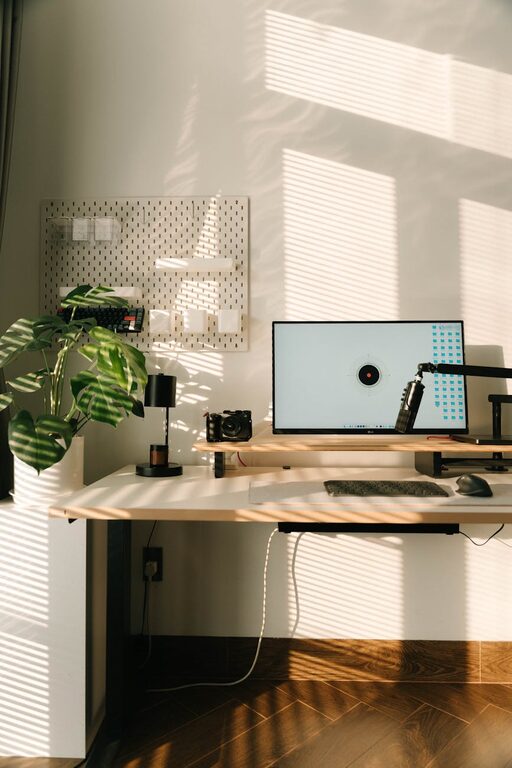
Creating a productive home office environment can make a huge difference to your workday. Whether you’re working remotely full-time or occasionally need to work from home, having a dedicated, well-organised, and comfortable space helps maintain focus and efficiency. Here are some helpful tips to design and maintain a home office that supports your productivity.
Choose the Right Space
Find a Dedicated Spot
Select a quiet, low-traffic area of your home to minimise distractions. If possible, avoid places like the kitchen or living room, which tend to be busy and noisy. A spare room or a corner of a bedroom can work well, as long as it feels separate from your relaxation areas.
Consider Natural Light
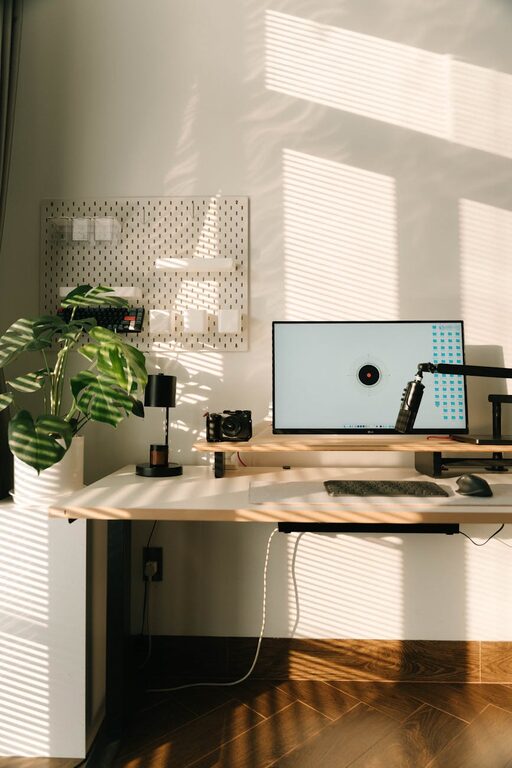
A spot near a window provides natural daylight, which improves mood and energy levels. Position your desk so the light comes from the side rather than directly in front or behind you, reducing glare on your screen.
Invest in Ergonomics
Get a Supportive Chair
Comfortable seating with good back support prevents discomfort and helps maintain good posture during long hours. Adjustable chairs allow you to customise the height and angle to suit your body.
Use an Appropriate Desk
Choose a desk that fits your space and work needs. The height should allow your elbows to be at a 90-degree angle when typing. If you use multiple screens or papers, ensure there’s enough surface area to keep things organised.
Position Your Screen Correctly
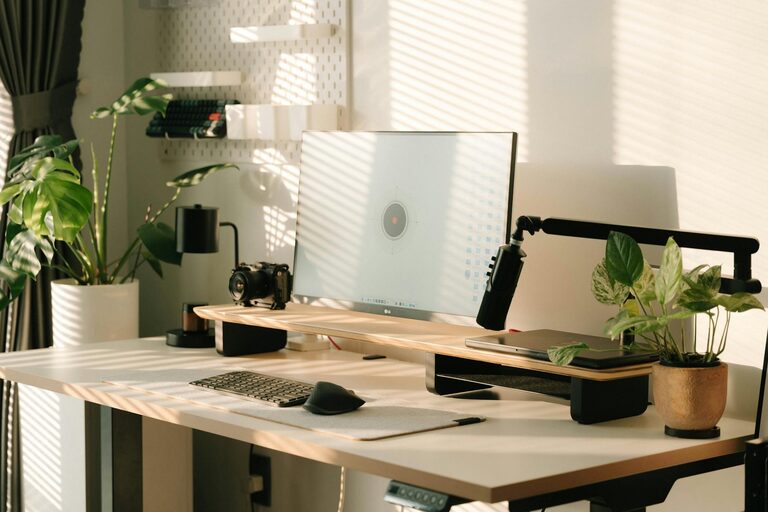
Place your monitor so the top of the screen is at eye level. This helps avoid neck strain. Consider using a monitor riser or an adjustable arm if needed.
Declutter and Organise
Keep Only Essentials on Your Desk
A clean workspace reduces distractions and helps you focus. Store stationery, documents, and other materials in drawers or organisers.
Use Storage Solutions
Shelves, filing cabinets, and desk organisers keep your materials tidy and easy to access. Label files and boxes for quicker retrieval.
Manage Cables
Use cable clips or a cable management box to keep wires untangled and out of the way. This also helps create a neat appearance.
Create a Comfortable Atmosphere
Control the Temperature
Make sure your home office is at a comfortable temperature, not too hot or cold, to maintain concentration.
Add Personal Touches
Include items like plants, artwork, or photos to make the space pleasant without causing clutter. Plants can improve air quality and add a relaxing green element.
Minimise Noise
If you can’t avoid noisy areas, consider using noise-cancelling headphones or white noise machines to maintain focus.
Manage Lighting
Use Layered Lighting
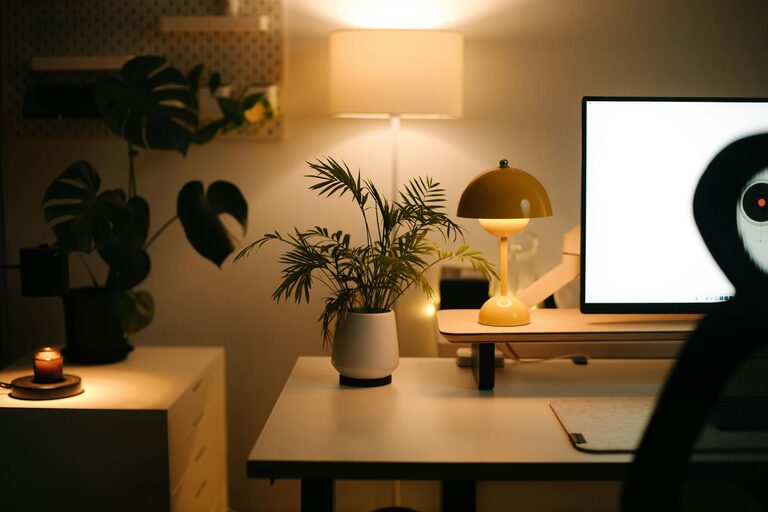
Combine natural light with good quality overhead lights and a desk lamp. Adjustable lighting reduces eye strain and allows you to work comfortably at any time of day.
Avoid Glare
Position screens and lights to reduce reflections. Anti-glare screen protectors can also help.
Establish Clear Boundaries
Set Work Hours
Define your start and finish times to create a routine. This helps separate work from personal life.
Communicate Your Space’s Purpose
If you share your home, let others know when you’re working and shouldn’t be disturbed.
Take Breaks Away from Your Desk
Step away regularly to stretch or walk around, which helps refresh your focus.
Use Technology Wisely
Ensure Reliable Internet
A strong and stable connection is essential for smooth remote work and video calls.
Keep Your Software Updated
Regular updates improve security and functionality.
Use Productivity Tools
Task managers, calendars, and focus apps can help organise and prioritise work efficiently.
Maintain Good Habits
Keep Your Space Tidy Daily
Spend a few minutes at the end of each day organising your desk and notes.
Reflect and Adjust
Periodically review what works and what doesn’t in your setup, making changes to improve comfort and productivity.
—
By carefully selecting your workspace, investing in ergonomic furniture, and creating an organised, comfortable environment, you can set yourself up to work more effectively from home. Remember, your home office should support both your work habits and wellbeing—take the time to design a space that feels right for you.
About the Author