Setting up a home office that inspires productivity and comfort is essential in today’s work culture. Whether you are working remotely full-time or occasionally, having a dedicated, well-organised space can drastically improve your focus, efficiency, and overall work satisfaction. Here are some practical tips to help you create a productive home office environment.
Choose the Right Location
Find a Quiet Spot
Select a space in your home where noise and distractions are minimal. Ideally, this should be away from high traffic areas such as the kitchen or living room. A quiet corner, spare room, or even a converted closet can work well.
Consider Natural Light
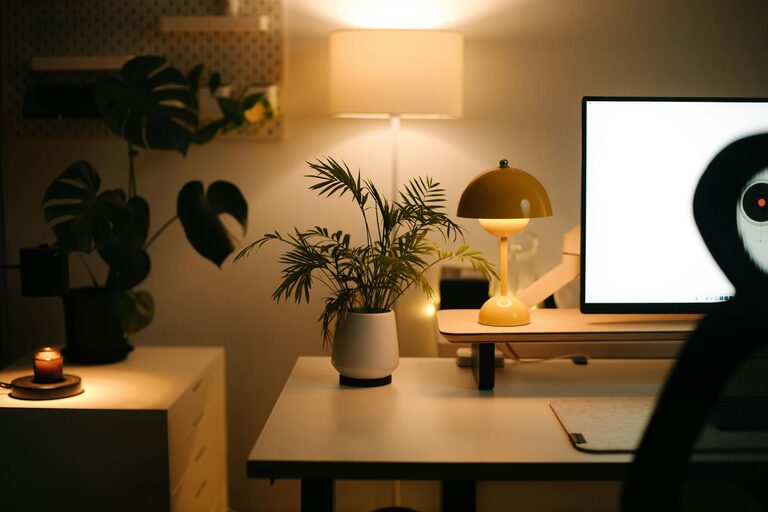
Natural light can enhance mood and energy levels. Place your desk near a window if possible, but avoid direct glare on your screen. If natural light is limited, invest in good quality lighting that mimics daylight to reduce eye strain.
Invest in Ergonomic Furniture
Comfortable Chair and Desk
Your chair and desk are the foundation of a good workspace. Choose an adjustable chair with proper lumbar support and a desk at a comfortable height to promote good posture. This helps prevent back pain and fatigue during long hours.
Organised Desk Layout
Keep your desk clutter-free with only essential items within reach. Use organisers, trays, or drawer dividers to keep stationery, documents, and gadgets tidied away but accessible.
Minimise Distractions
Set Boundaries
Clearly communicate your working hours and workspace boundaries with family or housemates to minimise interruptions. Use a ‘do not disturb’ sign on your door if needed.
Manage Digital Distractions
Switch off non-essential notifications on your phone and computer. Use productivity apps or website blockers if you find yourself easily distracted online.
Optimise Your Technology
Reliable Equipment
Invest in good quality technology like a fast computer, high-resolution monitor, and a reliable internet connection. This reduces frustration caused by slow devices or connectivity issues.
Useful Accessories
Consider accessories like a wireless keyboard and mouse, a laptop stand, or noise-cancelling headphones to enhance comfort and focus.
Create a Personal and Inspirational Space
Add Personal Touches
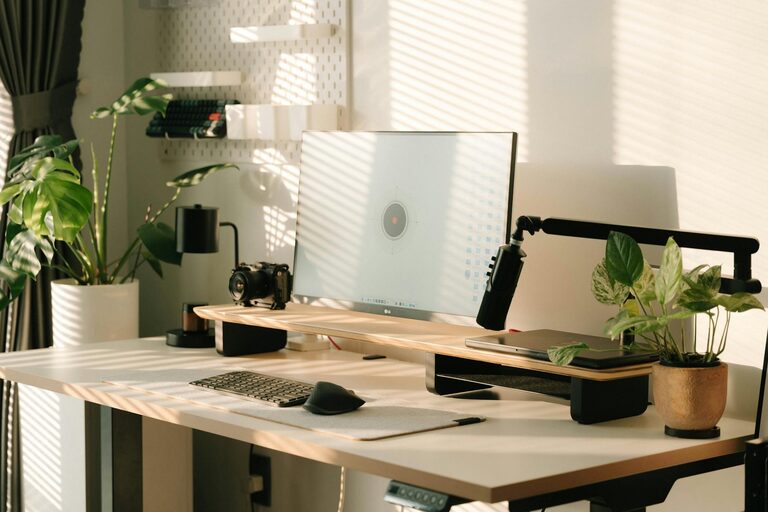
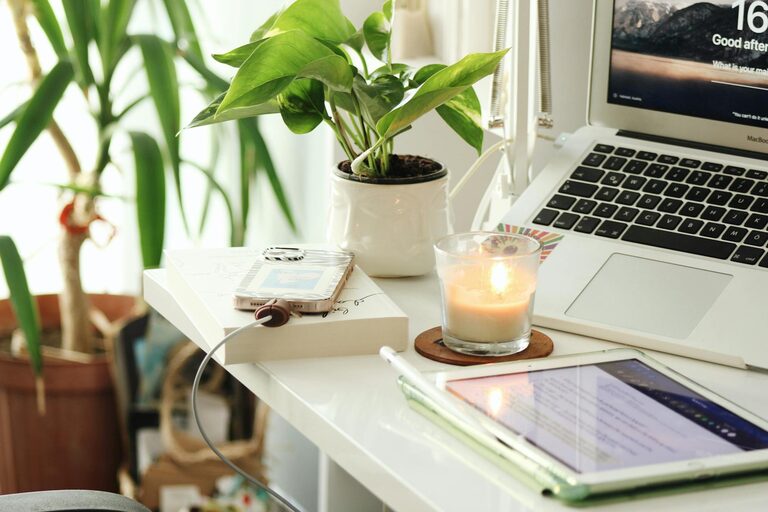
Decorate your home office with items that make you feel relaxed and motivated, such as plants, artwork, or photos. Greenery, in particular, can improve air quality and boost creativity.
Maintain a Clean Environment
Regularly clean and tidy your space. A clean workspace helps maintain clarity of mind and reduces stress.
Establish a Routine and Structure
Consistent Working Hours
Stick to regular working hours to maintain a healthy work-life balance. Having a set routine helps your brain distinguish between work time and personal time.
Take Breaks
Incorporate short breaks into your day to stretch, move around, and reset your focus. Techniques like the Pomodoro method (working in 25-minute intervals with breaks) can be very effective.
Manage Storage Efficiently
Declutter Regularly
Keep only necessary items in your workspace. Store outdated papers and items you don’t need in labelled boxes or filing cabinets.
Use Vertical Space
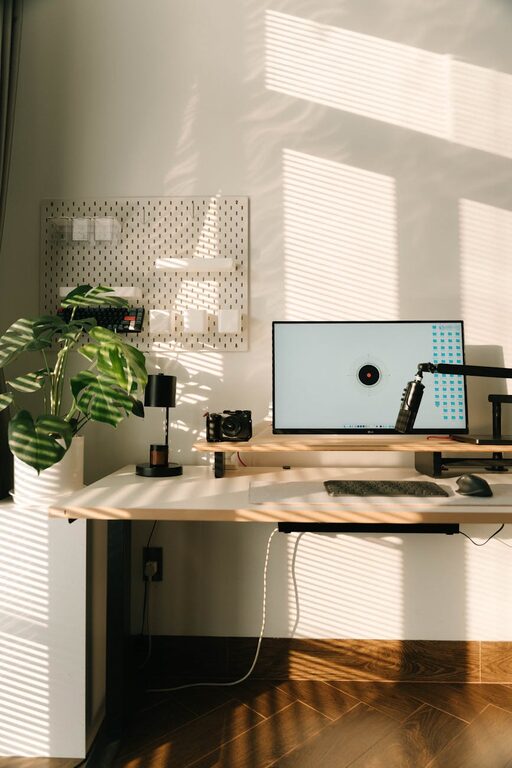
Use shelves, wall organisers, or pegboards to maximise storage, freeing up your desk space for essential tasks.
Maintain Good Air Quality and Temperature
Proper Ventilation
Ensure your home office is well-ventilated to keep fresh air flowing. Poor air quality can lead to fatigue and difficulty concentrating.
Comfortable Temperature
Adjust heating or cooling to maintain a comfortable temperature. Feeling too hot or cold can be distracting and reduce productivity.
Promote Healthy Habits
Stay Hydrated and Nourished
Keep a water bottle nearby and take time to enjoy healthy snacks to maintain energy throughout the day.
Encourage Movement
Incorporate short exercises or stretches during your breaks to reduce muscle tension and improve circulation.
—
Creating a productive home office environment may take some trial and error, but with these tips, you’ll build a space that supports your best work. Remember to tailor the setting to your personal preferences and needs – comfort and focus are the keys to success when working from home.
About the Author